


The functional ingredient landscape continues to evolve as consumers seek science-backed, natural solutions to support healthy metabolism and weight management.
Among botanical ingredients studied for these applications, Phaseolean, a standardized extract derived from white kidney bean (Phaseolus vulgaris), has demonstrated potential for supporting appetite regulation, weight management, and postprandial glycemic control.
Phaseolean exhibits α-amylase and α-glucosidase inhibitory activity, which may delay the digestion of complex carbohydrates and subsequently moderate their breakdown and absorption.
By slowing carbohydrate digestion, a greater proportion of undigested carbohydrates may reach the distal small intestine and colon. This process may influence the secretion of gut-derived hormones, including glucagon-like peptide-1 (GLP-1) and peptide YY (PYY), which are involved in satiety and appetite regulation.
It may also influence the postprandial response of ghrelin, a hormone associated with hunger. Together, these effects provide a potential physiological basis for the role of Phaseolean in appetite regulation, weight management, and postprandial glycemic control.
Clinical evidence: Efficacy and safety
Phaseolean has been clinically investigated for efficacy and safety on carbohydrate digestion, glycemic response, appetite-related parameters and weight management. Clinical findings to date suggest potential benefits across these metabolic endpoints, while also demonstrating good tolerability during the reported intervention periods.
1. GLP-1 booster: Modulating metabolic pathways for appetite control
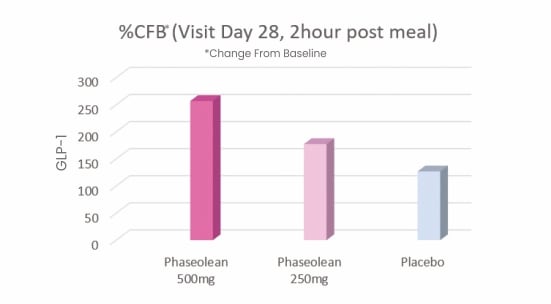
A randomized clinical study evaluated the dose-related effects of Phaseolean on fasting and postprandial serum GLP-1 levels in adults with prediabetes who were overweight or had class I obesity.1
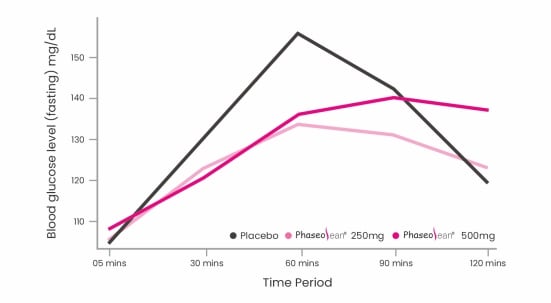
The findings indicated that Phaseolean supplementation influenced several metabolic and appetite-related biomarkers. Among the doses evaluated, 500 mg per meal produced the most consistent effects, including increases in GLP-1 and PYY responses, modulation of ghrelin levels, and reductions in postprandial glucose and insulin exposure.
These findings are consistent with the proposed mechanism of Phaseolean, in which inhibition of carbohydrate-digesting enzymes delays carbohydrate digestion and glucose availability, potentially influencing satiety signalling and postprandial metabolic responses.
During the 28-day intervention period, no adverse events were reported, and Phaseolean was reported to be well tolerated.
Increase in postprandial GLP-1 responses was accompanied by a reduction in postprandial glucose excursion, suggesting a potential association between enhanced GLP-1 secretion and improved postprandial glycemic control. Reduction in blood glucose spikes may support reducing cravings for carb-rich foods, thus supporting healthy weight and also leading to lower metabolic stress as requiring less insulin demand.
2. Glycemic response to a carbohydrate-rich meal: Support for lowering glycemic index
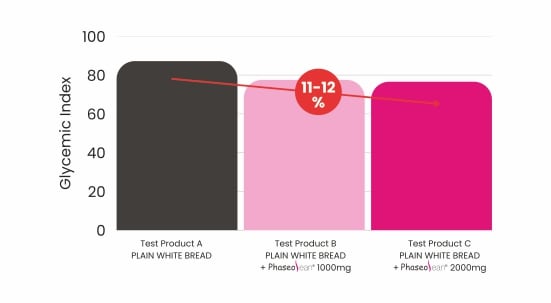
Another clinical study evaluated the effects of Phaseolean on the glycemic response to a carbohydrate-rich meal in healthy adults.2 Incorporation of 1,000 mg of Phaseolean into white bread resulted in a modest but consistent reduction in glycemic response compared with white bread alone.
Consumption of Phaseolean with white bread was associated with lower glycemic index (GI) and glycemic load (GL) values, indicating a lower postprandial glycemic impact under the conditions of the study.
As an α-amylase inhibitor, Phaseolean may slow starch digestion and thereby moderate the rate at which glucose becomes available for absorption. The observed changes in GI and GL, together with improvements in reported measures of satiety, fullness, hunger, and desire to eat, suggest that Phaseolean may help moderate postprandial glycemic responses and support appetite control when consumed with carbohydrate-rich foods.
This indicates the potential of Phaseolean as a functional ingredient for improving the metabolic profile of carbohydrate-rich meals while supporting satiety.
3. Weight management support with regular intake
A randomized, double-blind, placebo-controlled clinical study evaluated the safety and efficacy of Phaseolean for weight management in overweight and obese participants. Participants received either 500 mg per meal (1,500 mg/day) or 1,000 mg per meal (3,000 mg/day) of Phaseolean, or placebo, before meals.3
After 45 days of intervention, participants receiving Phaseolean demonstrated reductions in body weight and BMI compared with the placebo group. Interestingly, the 500 mg-per-meal lower dose demonstrated greater effects on weight-related outcomes compared with the higher dose at 1,000 mg-per-meal or placebo.
Oral supplementation with Phaseolean for 45 consecutive days significantly reduced body weight, BMI, skinfold fat thickness, and the hip, waist, and thigh circumference compared with those of the placebo.3
The observed effects are consistent with the proposed mechanism of Phaseolean, in which α-amylase inhibition delays the digestion of complex carbohydrates and may reduce the availability of carbohydrate-derived calories.3
How Phaseolean works
The proposed metabolic action of white kidney bean extract primarily involves the inhibition of carbohydrate-digesting enzymes within the gastrointestinal tract.
1. Inhibition of carbohydrate-digesting enzymes:
Dietary starches are initially broken down by salivary and pancreatic α-amylase into smaller carbohydrate molecules, which are subsequently digested into absorbable sugars. Phaseolean inhibits α-amylase activity, thereby slowing the digestion of complex carbohydrates.3,4
2. Modulation of carbohydrate and glycemic response:
Delayed carbohydrate digestion can reduce the rate at which glucose becomes available for absorption. As a result, Phaseolean may help moderate the glycemic impact of carbohydrate-rich meals. Studies evaluating white kidney bean extracts have reported reductions in estimated glycemic index values in certain carbohydrate-rich foods.5
3. Satiety and appetite regulation:
Undigested carbohydrates that reach the distal gastrointestinal tract can interact with the gut microbiota and undergo fermentation, producing short-chain fatty acids (SCFAs). These metabolites may influence gut-derived signaling pathways, including those involving GLP-1 and PYY, which play important roles in satiety and appetite regulation.6-8
Together, these mechanisms provide a potential link between delayed carbohydrate digestion, postprandial metabolic regulation, and appetite control.
From mechanism to metabolic support
The available evidence suggests that Phaseolean may offer a multifaceted botanical approach to metabolic health, combining delayed carbohydrate digestion with potential effects on glycemic response, satiety signaling, appetite regulation, and weight management.
For formulators, this positions Phaseolean as an evidence-based botanical ingredient and can be incorporated into functional nutrition and dietary supplement formulations. It is designed for health-conscious consumers, offering targeted support for delaying complex carbohydrate digestion, managing post-meal glucose spikes, and boosting GLP-1 secretion.
Phaseolean offers excellent versatility and easily integrates into diverse dosage forms, including tablets, capsules, powdered stick packs, ready-to-drink (RTD) beverages, and many other dose formats.
With versatile applications and convenient consumption, Phaseolean adds meaningful value to modern formulations, supporting smarter, science-backed approaches to overall metabolic health.
References
- Trial Registration: Clinical Trial Registry of India: CTRI/2026/02/103219
- Trial Registration: Clinical Trial Registry of India: CTRI/2026/03/106365.
- Singh, SC.; et al. A randomized, double-blinded, placebo-controlled, single-center, comparative study evaluating Phaseolean® safety and efficacy in overweight/obese participants. Heliyon. 2024; 10(15): e35144.
- Preuss, G.H.; et al. Bean amylase inhibitor and other carbohydrate absorption blockers: Effects on diabesity and general health. J Am Coll Nutr. 2009; 28: 266–276.
- M, Yanli.; et al. Effect of white kidney bean extracts on estimated glycemic index of different kinds of porridge. LWT. 2018; 96: 576-582.
- Spadafranca, S.; et al. Phaseolus vulgaris extract affects glycometabolic and appetite control in healthy human subjects. Br. J. Nutr. 2013; 109: 1789–1795.
- Muzaffar, H.; et al. Therapeutic Potential of White Kidney Beans (Phaseolus vulgaris) for Weight Management. Foods. 2025 Nov 18;14(22):3940.
- Feng, Y.; et al. White common bean extract remodels the gut microbiota and ameliorates type 2 diabetes and its complications: A randomized double-blinded placebo-controlled trial. Front. Endocrinol. 2022 Oct 11;13:999715.