


“It feels to us like a comeback fight, and you never know what the outcome of a comeback fight will be,” said Professor Jan Bruhn, an eminent professor of pharmacognosy and senior vice president of R&D at Mimer Medical.
Bruhn was enticed back to work after 15 years of retirement when Mimer’s owner and CEO Lars Janson came to him saying he had uncovered a patented spinach extract that had mysteriously disappeared from the market.
Known as Appethyl, it is the brainchild of Lund University professor Charlotte Erlanson-Albertsson and her husband Per-Åke Albertsson, a professor of biochemistry, who began integrating their expertise in weight management and photosynthesis nearly two decades ago.
They developed a spinach extract enriched for thylakoids, the cellular membranes responsible for photosynthesis which are reported to slow fat digestion and thereby increase the body’s production of satiety hormones GLP-1 (glucagon-like peptide-1) and CCK (cholecystokinin). Studies detailing the ingredient’s benefits have been published since 2009.
Swedish firm Greenleaf Medical launched the ingredient to the U.S. market in 2014, exclusively licensing the manufacturing technology from Lund University.
GreenLeaf applied to EFSA for a weight management health claim in 2021, and although the technical aspect (manufacturing, specification, quality control etc) of the application was accepted, the scientific backing for the specified health benefit was not, and the application was denied in 2023.
The denial coincided with the sudden loss of a major investor, who died during a diving accident, alongside the pandemic which made new investment channels more challenging. Greenleaf went bankrupt, and the ingredient disappeared from the market in 2023.
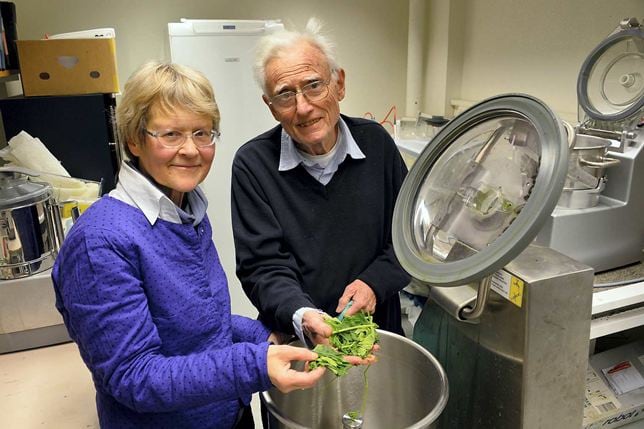
A second chance
Mimer Medical came across the ingredient “purely by accident,” according to Bruhn.
“One of the members of our little team had a weight issue and had taken a product containing the ingredient, and suddenly it was discontinued,” he said. “He was angry as he felt it helped him, and he met with Lars and asked him to do something about it. Lars went about researching the next day.”
On discovering all the Appethyl IPR was up for sale, Janson purchased it all, and within a month, he had set up a team of old, experienced friends and, importantly, enrolled the inventor Professor Charlotte Erlanson-Albertsson, now widowed.
The team filed an application for a new health claim to EFSA in September this year, this time focusing on the prolonged satiety and reduced cravings as opposed to weight loss, with these specific benefits backed by five clinical trials.
A 2015 study, covered by NutraIngredients associated a single 5 gram dose of the spinach extract with significant reductions in feelings of hunger and longing for food.
“The 12 week trial that demonstrated a 43% greater weight loss than control group also showed an up to 85% reduction in cravings for unhealthy foods such as sweets and chocolates after just one dose,” Jim Roufs, Appethyl’s U.S. scientific advisor, told NI at that time.
Relaunching in the Ozempic era
Noting that the ingredient had built good market momentum even before today’s heightened GLP-1 agonist awareness, Bruhn suggested the ingredient could be huge in today’s market.
“It was previously launched before the advent of GLP-1 drugs and so people didn’t know about this hormone at the time, so it was just launched as a weight reduction supplement, and it was just one in a line of products that were marketed with that angle so it was hard to stand out,” he said.
“And then along came Ozempic, and that revolutionized the weight management market in 2017. The market started to grow around the time of the sudden loss of the investor.”
He added that because the ingredient impacts two hunger hormones, it has a ‘broader’ and therefore more ‘gentle’ impact on the consumer compared to GLP-1 agonist drugs.
The product had previously been sold in stick packs, which people would simply stir into water, but Bruhn said there’s plenty of potential for functional food and drink applications as the product is clean, easy to mix and has a mild flavor.
Discovering EFSA
Bruhn describes the members of the team as “retired enthusiasts,” adding “our youngest member, we call ‘Junior’, is 62”.
The team’s combined years provide a huge wealth of experience in research and regulation in the world of pharmaceuticals, but encountering the protracted and confusing world of supplement health claim substantiation for the first time has been a significant challenge.
“EFSA has been quite a minefield of regulation, and you have to be qualified in various fields to submit an application,” Bruhn said.
“We are used to dealing with OTC drugs and are used to submitting applications and dealing with authorities, but this has been something quite extra... There are few new claims approved by EFSA, and that is probably because it is so difficult!”


