

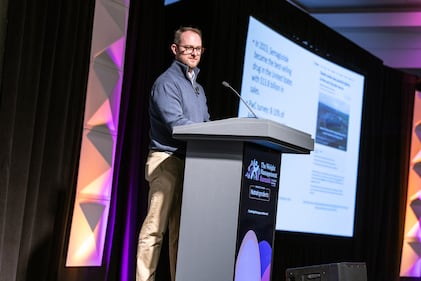


![Presenting on "Dihydroberberine: New Research on Blood Sugar Control and Implications for GLP-1 Related Weight Management," Shawn Wells, MPH, LDN, RD, CISSN, FISSN, CSO at NNB Nutrition, spotlighted what he called a critical post-GLP-1 window. “We're not trying to compete directly with GLP-1s [...], but what happens post-GLP-1?” he said, cautioning that “with semaglutide [...] around 60% of the weight loss is not fat. It was fat-free mass, like bone and muscles." Characterizing this finding as "very concerning,” he stressed the importance of “telling people to titrate back down so they don't have this rebound effect."](https://www.nutraingredients.com/resizer/v2/6E6BRRWUJZEFZL2MGLUIAA2VZ4.jpg?auth=dc31b0466d8dcecfefafcd8d8e01982fb7121c41fe0e9f66696bc89a722c5cfc&height=281)


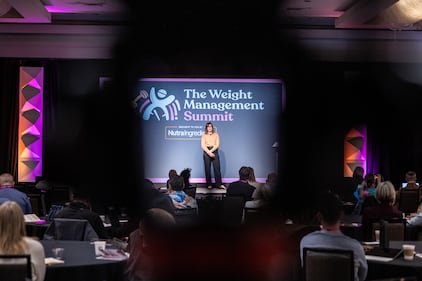
![Following Kreider's presentation, she was joined by Suleen Mak, vice president global trade marketing at Iovate Health Sciences, Mark Gardella, RPh, vice president of global product development at consumer health at Catalent, and Dr. Daniele Piomelli, professor of anatomy and neurobiology at Sanroo, in a panel on "Supporting Life After GLP-1 Drugs" led by NutraIngredients Editor-in-Chief Stephen Daniells. During the discussion, panelists explored strategies to support consumer lifestyle changes during weight loss, the evolution of weight-loss support supplement delivery formats, and market opportunities for industry stakeholders. As noted by Gardella, "We see this as an area that is obviously growing for supplements [...]. The off-ramp is going to be difficult, as consumers are removing a crutch and now really have to bear down and be dilligent about diet and behavior, and this is where industry is filling these gaps."](https://www.nutraingredients.com/resizer/v2/ISJBTX5OGRCEJDQHKQBQ7BV4GE.jpg?auth=1b48007cc0fa7f4e57c38dc157ab8d47da23a412357e663c9106dfbbc10292b6&height=281)

Across the half-day event, held in San Diego on Feb. 18, speakers focused on what this shift means in practice, from adjusting consumer expectations to new opportunities for supplements and functional food products.
State of the market and GLP-1 disruption
Opening the summit, Stephen Daniells, PhD, global editor-in-chief of NutraIngredients, pointed to the pace of change driven by pharmaceutical uptake and evolving product formats.
“With the surging increase in the use of GLP-1 receptor agonist drugs and new delivery formats entering the market, the opportunities for dietary supplements and functional food brands to support these consumers and deliver on the ‘happily ever after’ of former users are clear,” he said.
Several sessions returned to this theme, highlighting that even though traditional weight management supplements have lost ground, adjacent areas are gaining traction.
During her session, Sherry Frey, vice president of total wellness at NielsenIQ, shared insights into consumer behavior linked to GLP-1 use, while David J. Foreman, RPh, president at Herbal Pharmacist Media, focused on how nutraceuticals may support endogenous GLP-1 activity and related metabolic pathways.
Natural formulations gain traction
In addition to pharmaceutical disruption, speakers explored lasting interest in natural weight management approaches, particularly when brands can demonstrate efficacy.
New ingredient research and formulation strategies were recurring areas of focus. For example, in his presentation, “Dihydroberberine: New Research on Blood Sugar Control and Implications for GLP-1 Related Weight Management,” Shawn Wells, MPH, LDN, RD, CISSN, FISSN, CSO at NNB Nutrition, highlighted white space opportunites post-GLP-1 use and how supplement ingredients like dihydroberberine can support successful off ramping.
As a sustainable alternative approach to support weight loss, Robert Metzger, product development manager at Plexus, shared the results of his company’s clinical trials exploring the impact of its 72-hour nutrition-based protocol to “reset” metabolism towards fat oxidation.
Although weight management supplement sales have been declining, the event’s program noted that “there are green shoots of hope in select subcategories,” which were discussed at length throughout the summit.
Supporting GLP-1 users and life after treatment
Much of the discussion turned to what happens beyond the prescription phase, especially as more consumers look for ways to maintain results after stopping GLP-1 therapies.
Speakers addressed emerging questions around nutrient intake, muscle preservation and long-term weight stability, as well as the limited body of evidence guiding supportive strategies.
Presentations and panel discussions highlighted that long-term success depends on what happens during and after treatment and explored strategies to achieve lasting gains.
The event closed with two panels covering post-treatment support and future category direction, with speakers noting a need for stronger data, clearer positioning and solutions that fit into longer-term health journeys.


