

Bastyr University, located on 51 acres surrounded by Saint Edward State Park outside of Seattle, is one of the clearest examples of where the two overlapped. Founded in 1978 around a kitchen table, it became the first nationally accredited naturopathic medical school in the United States and the first to create an institutional bridge between natural medicine and the emerging natural products industry. Nearly 40 years later, natural products have ballooned into a $60 billion dietary supplement industry, but Bastyr is fighting to keep its legacy alive.
Founding president returns to a dire situation
In 2025, Joe Pizzorno, ND, co-founder and founding president of Bastyr, returned to a university facing a convergence of serious financial, operational and accreditation challenges.
“We found that the institution had lost $14 million in the previous three years,” he said. “Now for a small institution, that’s a huge amount of our value and then we were given a budget with a $3.3 million deficit.”
This included $2.5 millions in accounts payable that were 90 days in arrears. In addition, the university was in default on its $8.6 million bank loan, at risk of losing the campus, and under show cause for loss of accreditation. Student enrollment had fallen, down from 1,200 students to 705 since Dr. Pizzorno had passed on the administrative baton 25 years earlier.
“I could go on and on and on, but problem after problem after problem—it was just in terrible condition, but probably worst of all was that the mood of the community was one of pessimism and defeat, and even the clinic had been drifting away from naturopathic principles,” he added.
But there was some good news, too, embodied in a 600-strong group known as the Friends of Bastyr who trusted in the university’s founding mission and were dedicated to keeping it alive.
A big part of their strategy involved bringing back Dr. Pizzorno last summer on a one-year contract to right the ship, which he has with the help of a wealthy benefactor, industry and alumnae donations, salary cuts and the suspension of two programs. He still needs donors to step up by June 30 to erase all debt and prepare Bastyr for its next phase of growth.
“The institution is headed in the right direction now, but I want to be realistic about it—we’re still fragile,” he said. “You don’t take $14 million out of a non-profit that did not have big buffers to begin with without serious consequences. We still have $1.5 million in accounts payable that are 90 days overdue.”
6 Principles of Naturopathic Medicine
1. First do no harm: Utilize the most natural, least invasive and least toxic therapies.
2. Identify and treat the causes: Look beyond the symptoms to the underlying cause.
3. The healing power of nature: Trust in the body's inherent wisdom to heal itself.
4. Doctor as teacher: Educate patients in the steps to achieving and maintaining health.
5. Treat the whole person: View the body as an integrated whole in all its physical and spiritual dimensions.
6. Prevention: Focus on overall health, wellness and disease prevention.
Bastyr’s needed influence on the natural products industry
Bastyr University has produced over 10,000 graduates accredited in natural medicine and many who have gone on to become influential figures in the naturopathy and herbal medicine ecosystem well before the TikTok era.
These alumnae sit at the intersection of medicine, education and commerce, turning traditional remedies into clinical protocols and paving the way for products and market trends as a result. They also help to preserve the soul of natural medicine, which is cultivated through holistic, patient-centered preventive care—an approach that carves out a space for evidenced-based supplements and natural products.
Among the most influential graduates is Michael Murray, ND, class of ’85 and one of the world’s leading authorities on natural medicine. He and Dr. Pizzorno co-authored The Encyclopedia of Natural Medicine, a best-selling and foundational playbook for modern natural health and supplements that popularized condition-specific protocols and helped legitimize food-based medicine.
“The collective influence of Bastyr University graduates has contributed greatly to the significant growth to the natural products industry,” he said. “They have driven product development, research and education of natural products to all segments of the marketplace including health care practitioners, retailers and consumers.”
In the growing healthcare practitioner channel, members of the 44 graduating classes of the Doctor of the Naturopathic Medicine program serve as gatekeepers to condition-specific products, long recommending professional-grade brands including Metagenics, Gaia Herbs, Thorne, Pure Encapsulations and Standard Process to their patients.

Michelle Simon, ND, class of ’02 and chair of the board of directors for the Institute of Natural Medicine, is encouraged that Bastyr is now returning to its roots of science-based natural medicine, noting that its regain of prominence is timed perfectly to align with a moment in history “ripe for revolution” in terms of how the system and consumers approach whole person health.
“An institution that respects the inherent ability to heal and educates both about the conventional approaches to health—urgent, reactive and pharmaceutical predominant—as well as those therapies that aim to restore health rather than manage disease is needed now more than ever,” she said. “People want medicine that prevents illness and promotes vitality; this is a place where it is taught well.”
While the natural products industry arose from apothecaries and wellness practitioners, the rapid rise of the direct-to-consumer channel and its frills changed this dynamic but also created what Dr. Simon identifies as unintended consequences.
“Consumers face overwhelming choices, with little clinical guidance beyond marketing messages,” she said. “Improvements in health have not matched the investments. I think it is time to bring the practitioner back into the equation. AI has a role to play, but there is something important about a therapeutic relationship that centers on the individual patient, their whole health picture, and is part of a dynamic interpersonal connection, which is not easy to replace. Schools like Bastyr University graduate just such practitioners, and we need them now more than ever.”
A re-intertwining: ‘The truth of our medicine will out’
Returning Bastyr to its roots and resurrecting its ties to industry requires refocusing on the founding naturopathic principles that had been passed down to the university’s founders from healers past including John Bastyr, the father of the modern naturopathic medicine movement who helped rescue the profession from obscurity after the rise of industrialized medicine.
Dr. Pizzorno and his co-founders were former students of Dr. Bastyr at the National College of Naturopathic Medicine and trusted deeply in his conviction in the healing power of nature (Vis Mediatrix Naturae).
“The truth of our medicine will out,” Dr. Bastyr once said, adapting a line from Shakespeare’s The Merchant of Venice. “The truth of what we are doing will always survive.”
Conceived at a time when naturopathic licensure was under threat in Washington State and under attack by the allopathic community, his namesake university had as mission to bring scientific legitimacy to natural medicine and spur a resurgence in the field.
“We created Bastyr to establish a strong scientific foundation—and that was a bit challenging for the profession, because science with a capital S was what was used by the American Medical Association to pretty much destroy the profession,” Dr. Pizzorno said. “And it was to remind people that science wasn’t owned by anybody—it’s a way of looking at the world so that what we do has credibility, and we do research not to prove ourselves, but we do research to get better.”
By the time Dr. Pizzorno left his post as president 22 years later to pursue a passion for environmental medicine, the culture of science-based natural medicine was well embedded and supported by modern textbooks, trained faculty and an expansive pool of prepared practitioners.
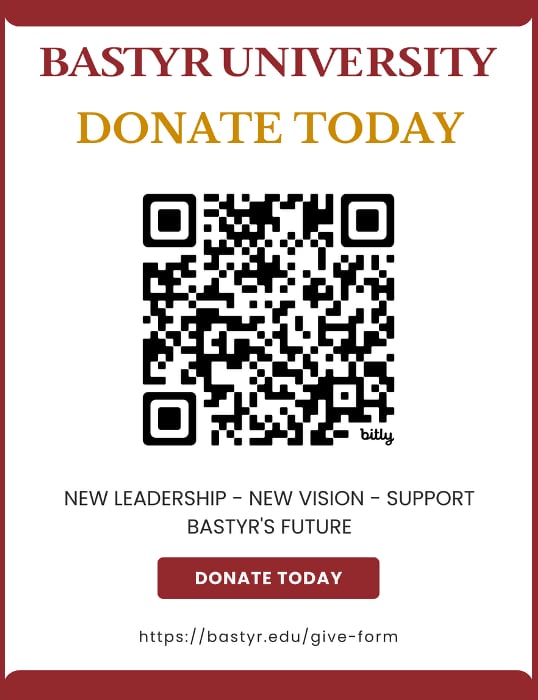
Bastyr has also consistently had at least one representative of the natural products industry on its board since founding, and records show that over 75 natural products companies have made donations of $10,000 to $1 million over the years. This includes a recent three-year $1 million pledge from Barlean’s Organic Oils.
The work to revive Bastyr to prominence is not only a call for funding and student enrollment but to preserve, and perhaps evolve, the natural health movement.
“With declining student enrollment in colleges across the country and the decrease in federal student loans, I think Bastyr needs to embrace a larger vision,” Dr. Pizzorno said.
As Bastyr approaches its 50th anniversary, that vision expands to include a healing village—imagined as a constellation of centers of excellence dedicated to research, clinical services and advocacy across field from diabetes and integrated cancer care to nature cure and healthy aging.

