


Today, the microalgae strain Schizochytrium has become a common source of plant-based omega-3 in the dietary supplement market.
At the industrial level, Schizochytrium can produce omega-3 via biomass fermentation.
The discovery of Schizochytrium as a source of plant-based omega-3 fatty acids dates back nearly 40 years.
Dr. Barclay had wanted to provide a solution for supplementing omega-3 without taking fish oil, the dominant form of omega-3 supplements.
“Research in the 1980s pointed to a lack of omega-3s in the diet and if we could restore that, especially the long-chain EPA and DHA, we could positively affect human health at the cardiovascular level and help with maternal health and infant development,” he told NutraIngredients after the award ceremony. “Back then, many pharmaceutical companies were getting doctors to prescribe encapsulated fish oil to their patients, but people did not like it because the refining of fish oil had not been optimized yet.”
The aquatic ecologist then decided to explore further up the food chain and assess microalgae as a potential source of omega-3 for human consumption.
“Fish do not produce omega-3, but omega-3 fatty acids are accumulated in fish when they feed on little shrimp, which in turn feed on algae,” he said. “I thought that if we could go straight to algae, then we could produce a product that might have enhanced stability, taste better and is more easily accepted by consumers.”
Finding the right strain: The journey across the states
The next question is then to find out how best to grow microalgae for its omega-3.
Outdoor pond cultivation may come to mind first, but there are various external factors to consider, such as contamination from insects and bird feces. It is also harder to control the nutrient culture for growing algae.
Fermentation became the next option that Dr. Barclay wanted to try out.
“Because you do not have lots of control in outdoor cultivation systems, I decided to skip that and go directly to fermentation because it is conducted in a sterile environment and the food industry has already accepted the method,” he told NI.
This, however, led to another challenge - since algae grows well in seawater, how can algae grow in steel fermenters without seawater corroding the fermenters, something which can cost hundreds of thousands each?
That was when Dr. Barclay set out on his journey across the states to identify microalgae strains that can grow and produce omega-3 even under harsh conditions.
The inspiration to do so comes from understanding how and why algae produce omega-3 in the first place.
“Guess where the highest concentration of omega-3 fatty acids is? They are in the Antarctic/Artic algae. These algae make the omega-3 fatty acids and incorporate them in their membranes. The omega-3 fatty acids keep their membranes fluid so they can still function and photosynthesize on a cold day in the water,” he said.
“We hypothesized that there would be other reasons as to why algae would make omega-3 fatty acids, other than as an adaptation to cold temperatures. Since there are hundreds of thousands of algae strains in the environment, I thought that there could be at least several strains that made omega-3 fatty acids as an adaptation to life in rapidly changing or harsh environments.”
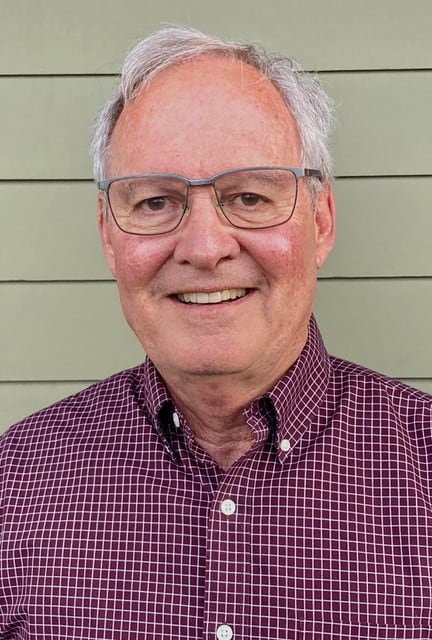
Dr. Bill Barclay
Rapidly changing or harsh conditions, such as high and low salinity, high and low temperatures, high and low moisture, rapid variations in solar irradiance or any combinations of these, often occur in intertidal areas of the oceans or in saline locations in desert-like environments, he explained, which led him and his team to hypothesize that algae strains growing in these environments could be producing omega-3 fatty acids to better adapt to the rapidly changing environments.
Some of the factors like high temperature would also suggest that these algae might be able to grow much faster than algae strains adapted to cold water environments like the arctic, and ultimately be better candidates for commercial production, he said.
From Texas to the Great Salt Lake in Utah and the deserts of the Southwest, wherever saline lakes are found, Dr. Barclay screened various microalgae strains and eventually came across the Schizochytrium strain that grows along the Southern California coast.
It is also the strain that grows exponentially in harsh conditions and at the same time sticks itself to the sides of the fermenters, instead of being clumped together like the other strains.
“I isolated various strains that could make omega-3 and some could grow under low salinity and high temperature opposite the conditions found in the Arctic. Two or three of these strains grew well and produced omega-3s, but they had other attributes that weren’t good. They were clumpy; they stuck together, making it hard to grow them. You want them to be individual cells so that they are easily exposed to nutrients and grow quickly. The most unusual strain that I found was Schizochytrium. It just grew very rapidly and produced large amounts of DHA-rich oil."
Unexpected results from lower salinity
An unexpected finding was that the Schizochytrium strain was so robust that it produced even more omega-3 under low salinity - an important prerequisite so as not to corrode steel fermenters.
“Seawater has a salinity level of around 30 parts per thousand (ppt), and the company that I was initially working with came back to say they wanted to do a salinity level of 5ppt to protect the fermenters. I thought they were crazy but still tried it,” he said. “We reduced the salinity, and unexpectedly when we got down that low, it further enhanced lipid synthesis.”
Another key consideration was the particle size of the microalgae. A smaller particle size is favored as it would enable a more effective, scalable fermentation.
From start-up to bigger ventures
To bring his discovery to commercialization, Dr. Barclay founded OmegaTech Inc. (Boulder, Colorado) in 1987.
OmegaTech came to partner with Kelco/Merck, which was exploring different products that they could produce in their fermenters. During this time, Kelco/Merck helped scale up the fermentation-based technology and achieved food safety and regulatory approvals.
OmegaTech was subsequently acquired by Martek Inc., also its strongest competitor, to leverage their complementary patent portfolios and production and extraction platforms.
Martek was later acquired by DSM - known today as dsm-firmenich - which scaled up the technology, improved extraction methods, identified techniques for improving EPA production and provided worldwide marketing and regulatory expertise.
Dr. Barclay was also the manager at DSM-Boulder Nutritional Research Center, DSM Nutritional Products, Boulder, Colorado, before retiring in 2012.
Business 101: Not overpromising and funding your own business
Before founding OmegaTech, he was involved in several start-up ventures in aquaculture. One of the projects was to grow freshwater prawns, Macrobrachium, native to Vietnam.
Two key principles stuck with him throughout his business ventures.
The first is not to overpromise and the second is to fund his own business at the start.
“A lot of times, startups try to overpromise what they can do, and I wanted to take all that pressure off of me, and I wanted to spend my own money and show that my idea was viable and it would work,” he said. “I have seen how start-ups were facing immense pressure from their funders, and when they couldn’t do what they had promised, everybody got mad at them and this is a miserable way to do research. This was why I wanted to prove the concept myself first and later look for investments. It’s a benefit both to the investor and to me as the inventor.”
To fund his business, his late wife, Dr. Ofelia Miramontes, a former professor of education and associate vice chancellor for diversity and equity at the University of Colorado at Boulder, had agreed to mortgage their house. It was also during a period of economic downturn that he set up his business.
“As a result, I took out a second mortgage on our house to fund my own research. I told my wife I would go back and do something else if it did not work out. She would come down to the lab and help wash test tubes on the weekend. She was wonderful in supporting the early technology development. She was my first lab technician.”
That period of economic downturn also turned out to be a period of opportunities, as he was allowed to use the laboratory at the University of Denver, which had then laid off several professors from the biology faculty and had laboratory space to spare. In turn, he contributed back by providing scholarships to the university.
Asked what gave him the confidence to take the risk of funding his own business, he said, “I thought the health benefits of omega-3 were potentially huge. All of the babies who would be on infant formula would benefit significantly from having omega-3 fatty acids fortified in their infant formulas. These huge benefits made me reflect on how this would be a great way to focus my research and have a great life by making a significant contribution to human health. And I was recently told that to date, approximately 250 million babies have now received infant formula with life’s DHA which makes me very happy that my research goals have been met.”


